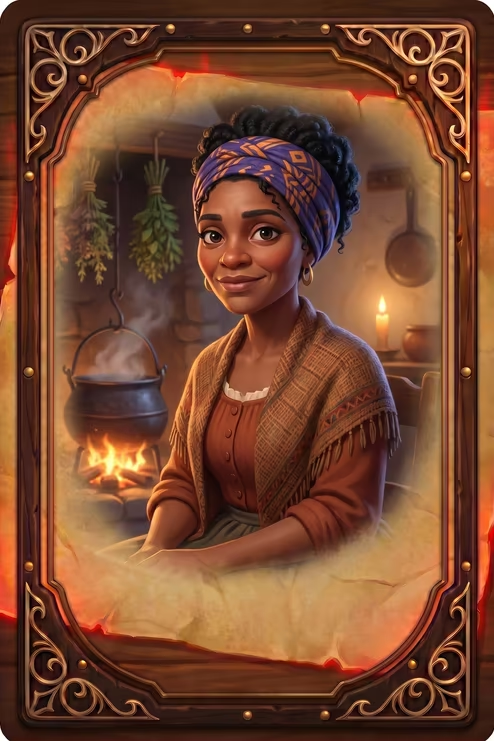
Tituba
Reads the room before the room reads her. Useful when every lantern looks guilty.

A secret trial for 4–12 players
Gather friends, draw cards, stack accusations — and try not to be holding Accusation III when the town loses its patience.
Why you'll lose sleep
Hidden witches. A sheriff with opinions. Fifteen role characters who all swear they're innocent. What could go wrong?
Stack red accusation cards until someone faces trial at 7+ points. Then the witches pick a victim after dark. Rinse, repeat, panic.
Tituba, Abigail Williams, John Proctor, Giles Corey — each with a unique ability. Giles, famously, refuses to die quietly.
Scapegoats, black cats, matchmakers, infections, and the ever-popular Night card. Romance was briefly legal in Witch Town. Briefly.
No friends online? AI fills empty seats so you can practice lying before the real humans arrive. They are also very good liars.
Interactive tutorials for people who skipped the rulebook. Learn day pressure, night watch, and why you should never trust the Matchmaker.
Every match gets a narrative replay — "Trial of the Innocent," "Night of Shadows," and other headlines the town will deny later.
By daylight
Talk fast, point fingers, and remember: in Witch Town, being right and being alive are not the same hobby.
Each turn: draw from the deck, or play an action from your hand. Accusations stack until trial threshold.
When accusation points hit seven (role modifiers apply), the accused reveals. Witch? Eliminated. Civilian? Oops.
Green cards scapegoat and curse. Blue cards deploy black cats and asylums. Use them wisely — or on your best friend.
By moonlight
Win as good by exposing every witch. Win as witches by outnumbering survivors. Or draw if the deck gives up — everyone's favorite ending.
Hidden witches coordinate a murder vote. Democracy, Witch Town-style.
The sheriff guards one player. Infection and conspiracy still invent new ways to ruin the night.
Reveal your identity to protect yourself. Bold. Also tells everyone exactly what you are.

The deck
Fifteen role portraits. Four identity types. Fifty-nine ways to ruin a perfectly nice town meeting.
The town's love language. Stack points until someone faces trial.
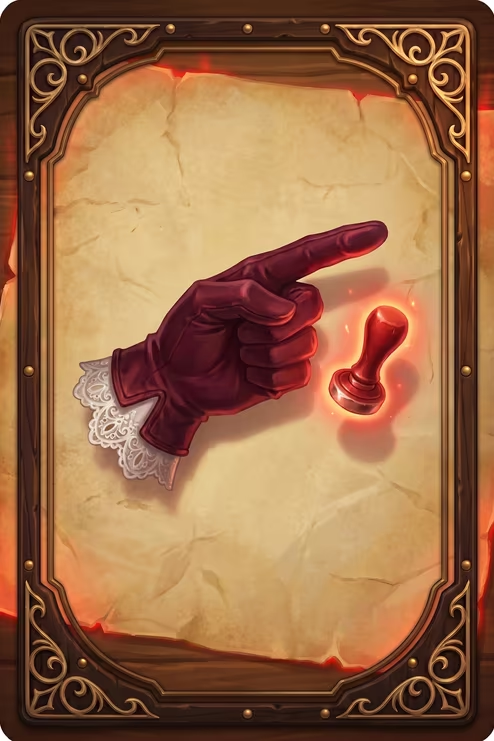
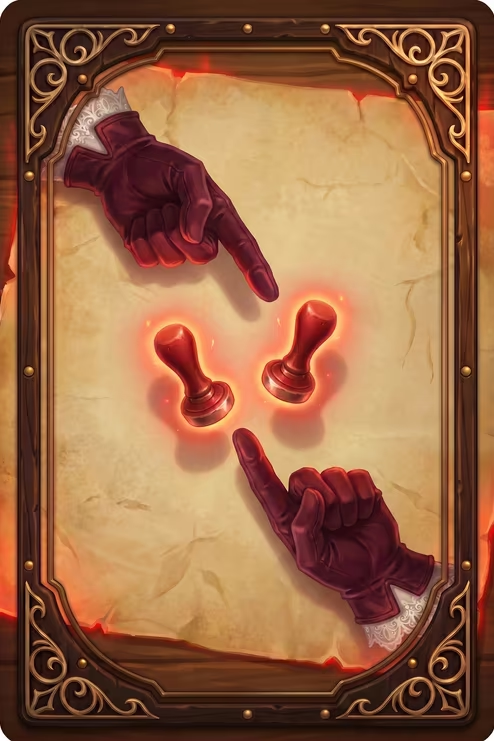
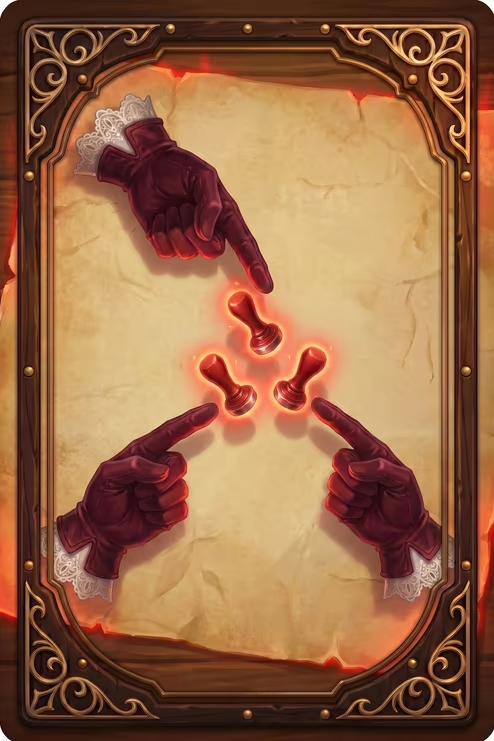
Scapegoats, curses, and other polite disasters.
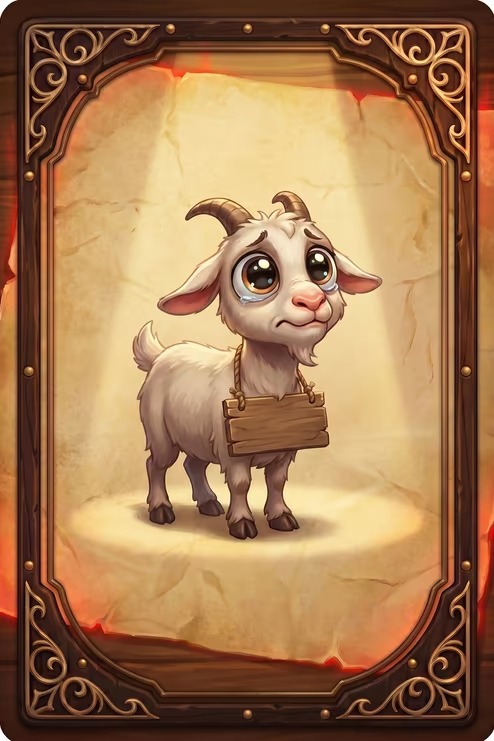
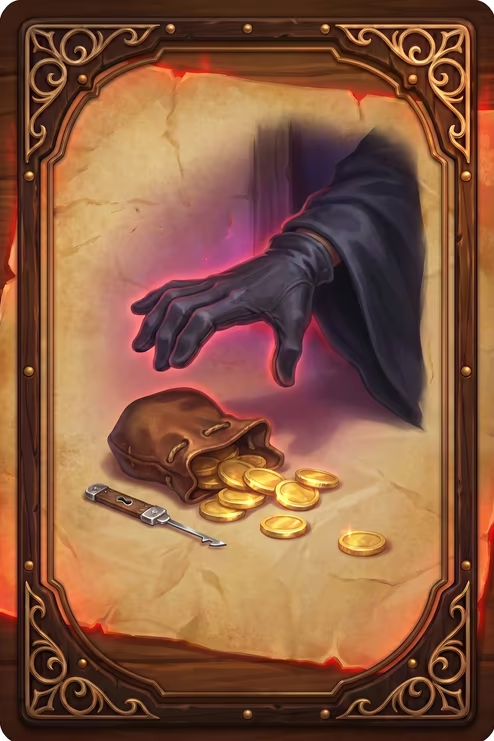

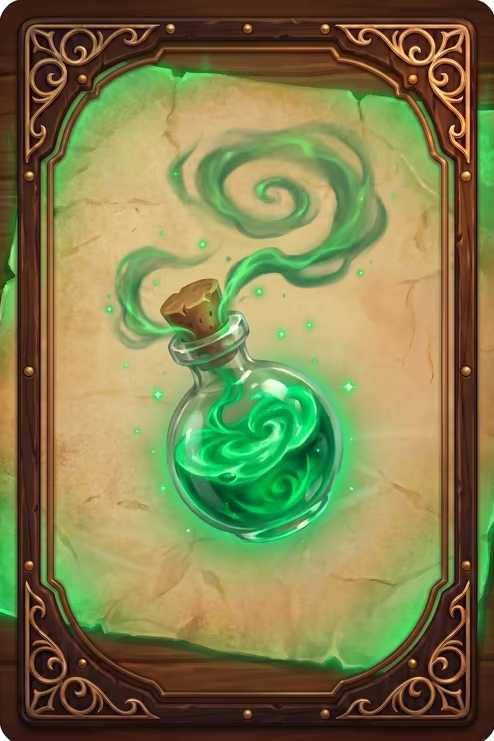
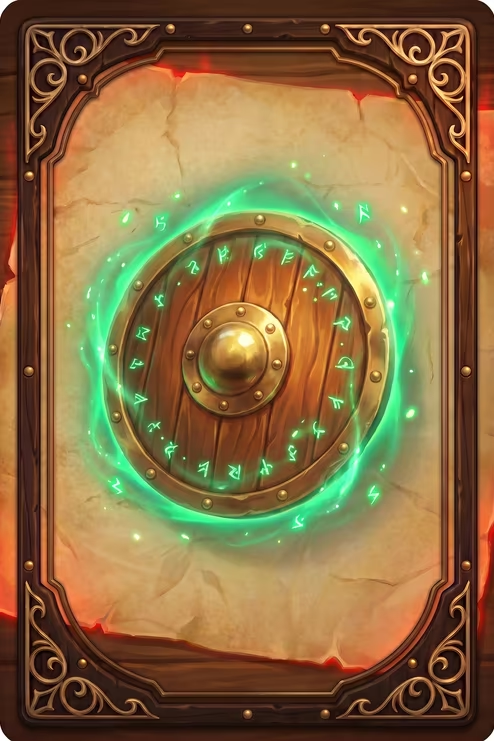
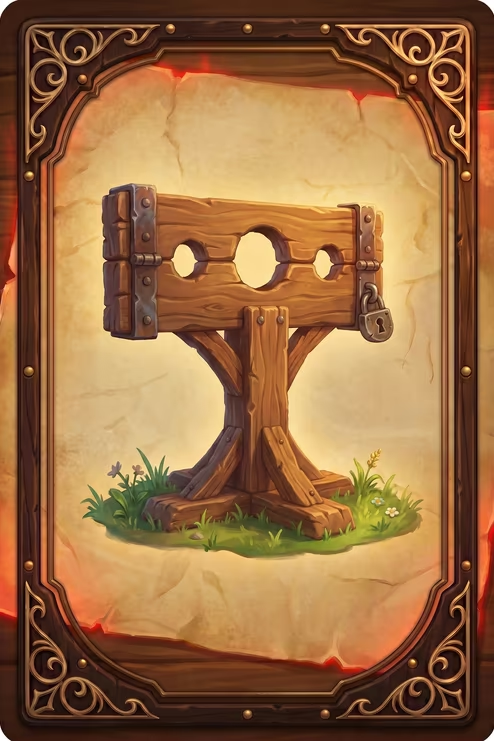
Social tools. Romance was briefly legal in Witch Town.
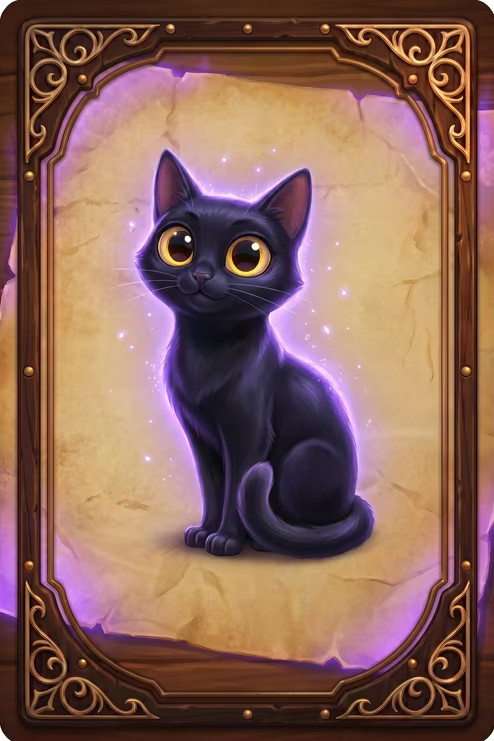
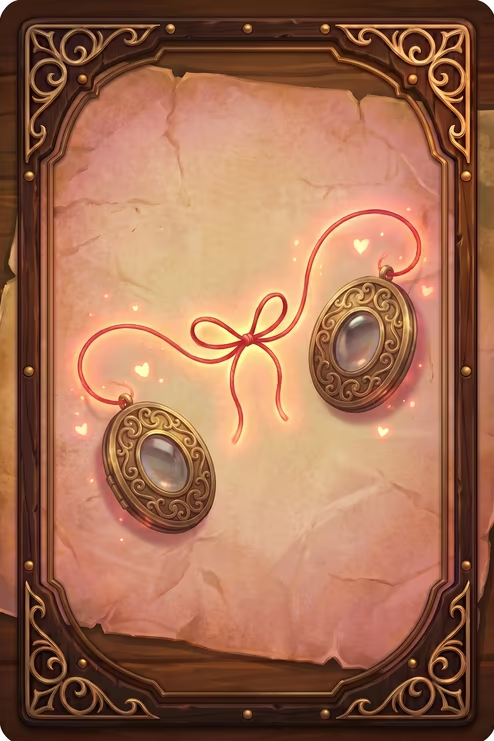
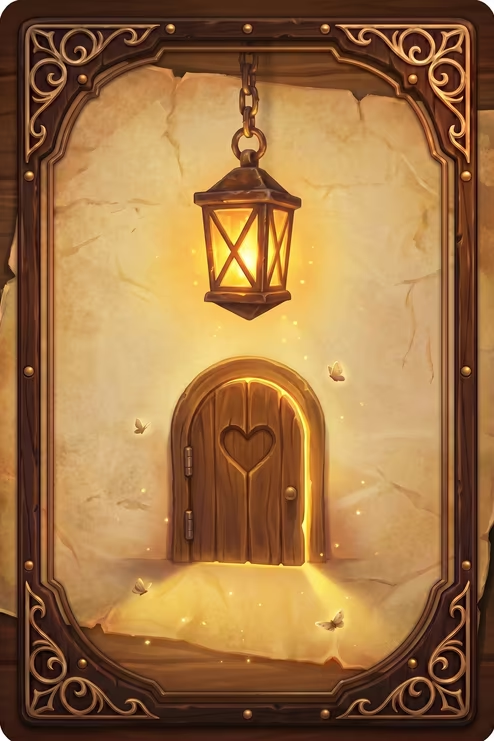
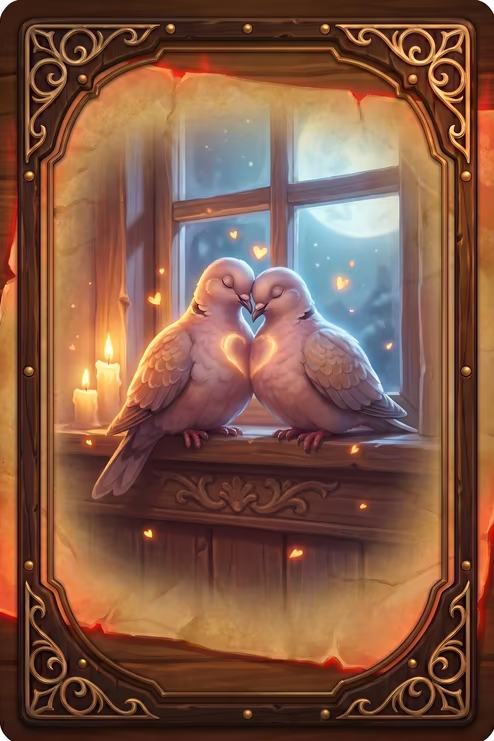
Dark cards for dark hours. Try to look surprised.
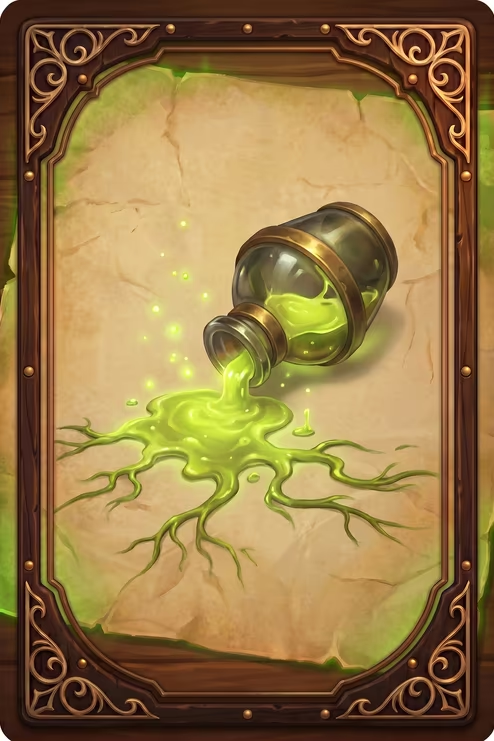
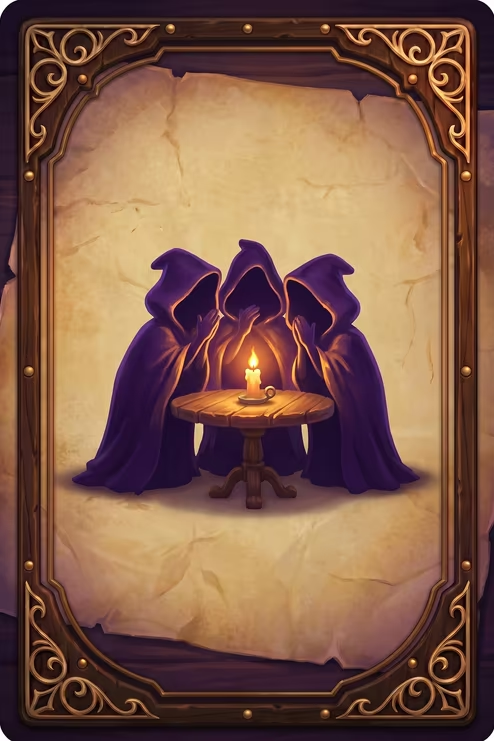

Who you actually are. Keep the card face-down until you cannot.



The circle
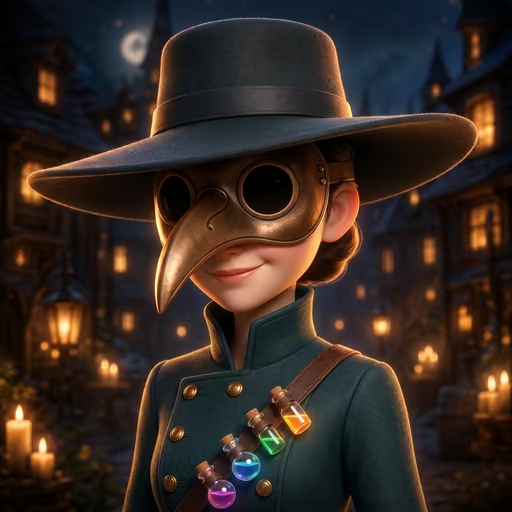
Table avatars for your gathering — not your hidden role. Trust no portrait.

Rowan

Milo

Marcus

Isolde

Evelyn

Gideon

Mara

Silas
Beatrix

Lydia

Tobias

Prudence
Role cast
Pick a character with a real ability — then pretend you drew it at random.
Reads the room before the room reads her. Useful when every lantern looks guilty.
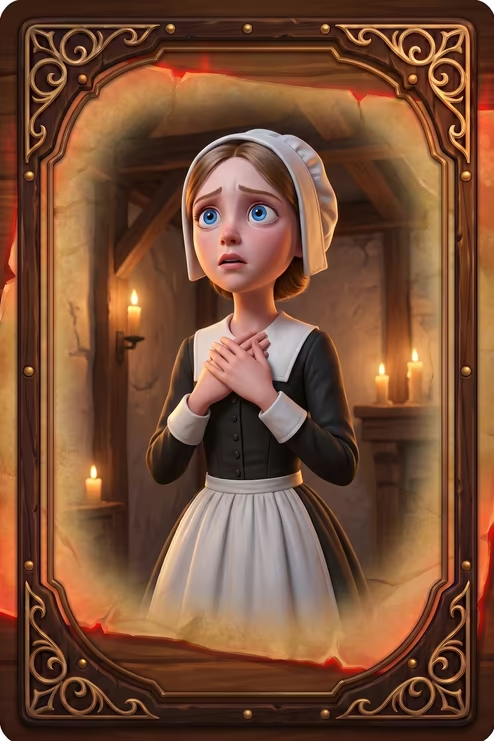
Turns a whisper into a trial agenda. Never let her narrate the evening unsupervised.

Honest to a fault — which, in Witch Town, is still a fault.
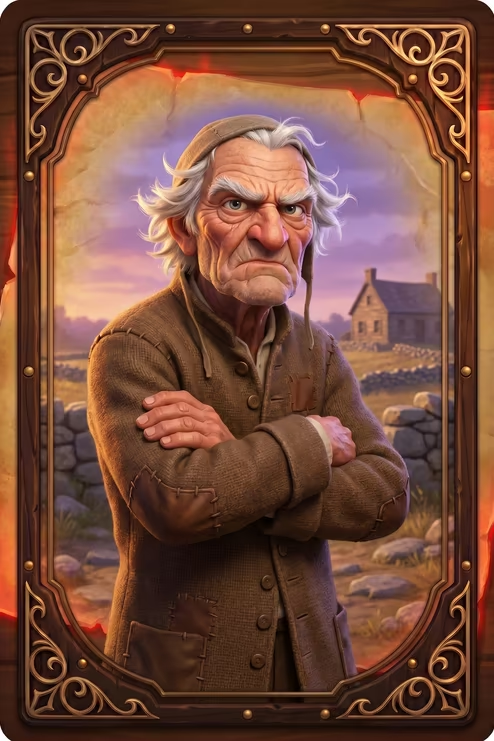
Refuses to die quietly. The town respects that. Reluctantly.
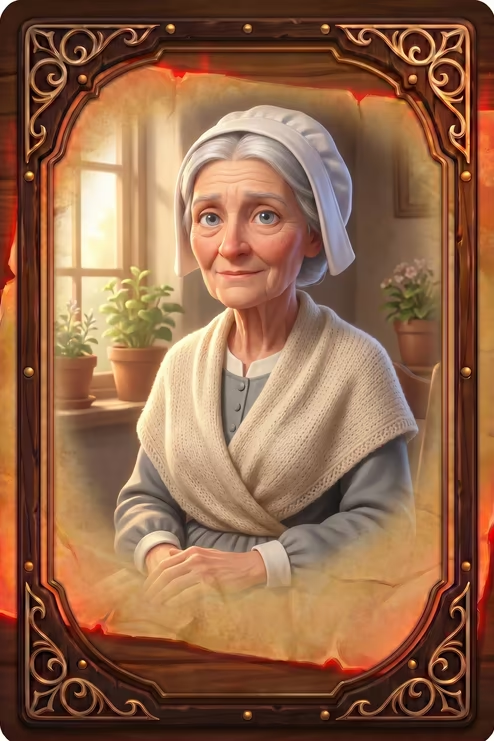
Calm enough to make accusations feel rude. That is her whole strategy.
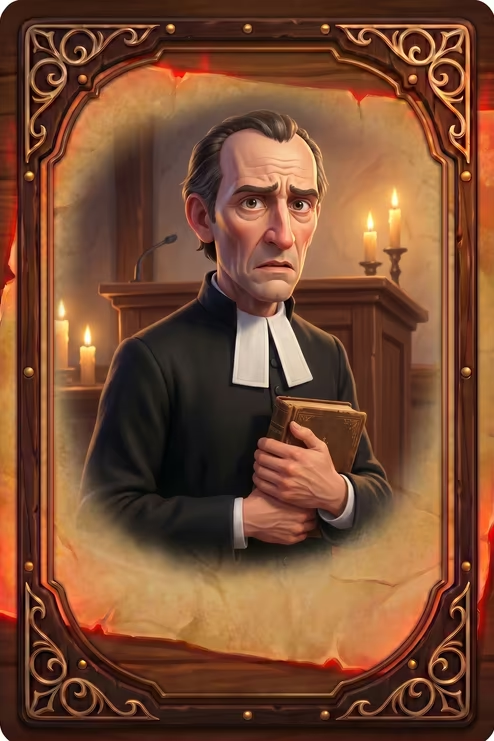
Believes the sermon first and the evidence second. Sometimes that works.
Step 1: Gather your circle
Open Witch Town, pick a town name, and invite 4–12 players with a room code (WT-XXXX-XXXX). Or hit Quick Play and let AI townsfolk fill the empty chairs. They are suspiciously polite.
Step 2: Draft your role
Choose from fifteen role characters — each with a unique ability. Then receive your secret identity: witch, sheriff, or civilian. Act natural. Immediately fail at acting natural.
Step 3: Survive the bell
Play cards, stack accusations, survive trials, and endure the witching hour. Win by exposing all witches (good) or outnumbering the town (witches). Lose by being you, probably.
Bonus: Watch the replay

Dev updates, design notes, and patch notes from the people who keep adding cards you'll hate receiving.
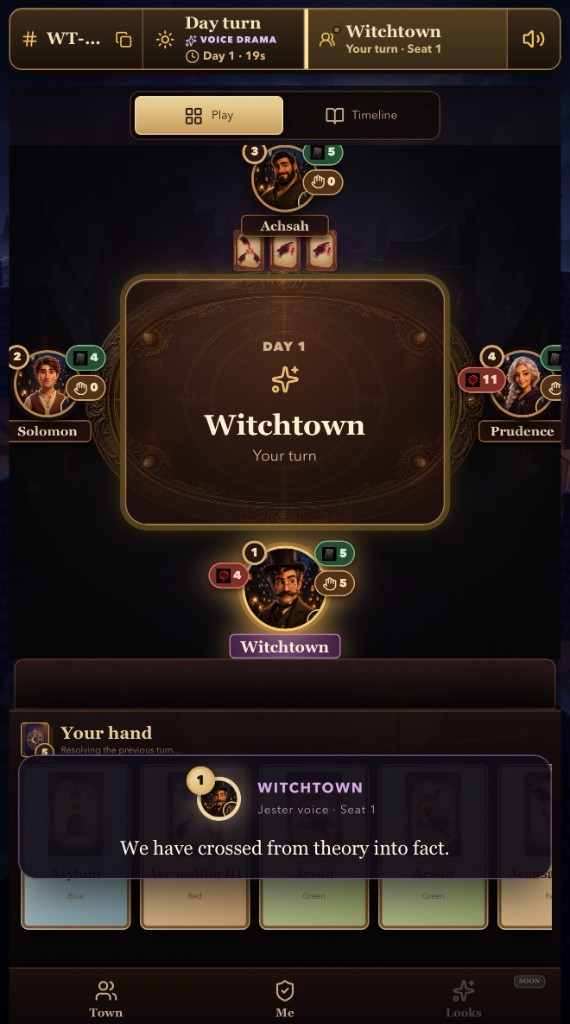
New mode: skip the canned audio, speak the lines yourself. Your seat voice sticks for the whole match. Judgment has arrived, whether we are ready or not.
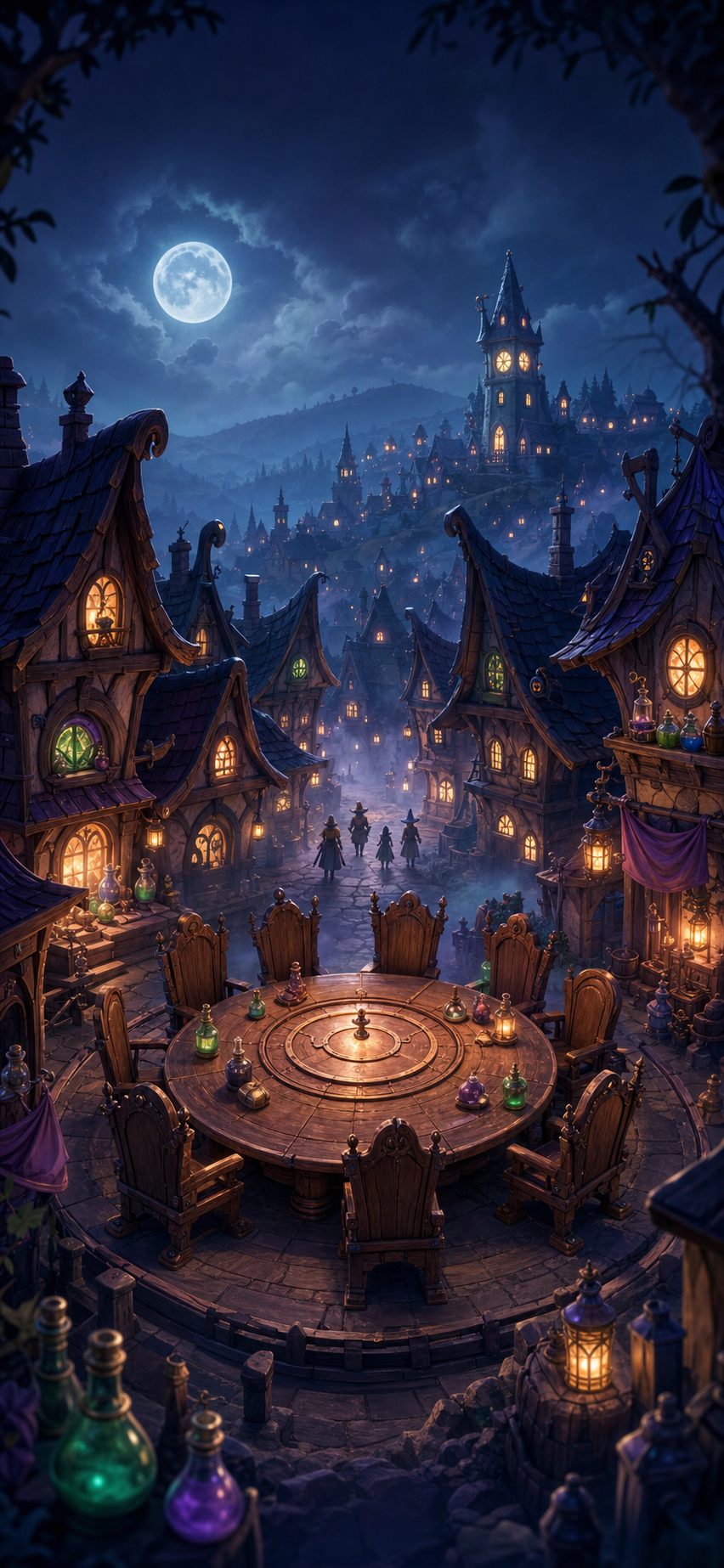
We built a secret trial for 4–12 players. Now we built a website that explains it without spoiling your lies.
Every match gets a narrative replay with headlines like "Trial of the Innocent" and "Night of Shadows." The town will deny writing them. We wrote them.
The second ruleset drops fifteen role characters into a deck that already hated you. Here is what changed and why your favorite scapegoat still works.
FAQ
Everything you need to know before the midnight bell — and a few things you'll wish you didn't.
Yes. Open your browser, pick a name, and play. No download, no subscription, no sacrifice required. (In-game sacrifices are a separate mechanic.)
4 to 12. Quick Play fills empty seats with AI townsfolk so you can start with fewer humans. The AI are surprisingly judgmental.
Only in the game — and even then, mostly in the sense that your friends will betray you there. Witch Town is a fictional social deduction card game. Play responsibly.
Yes — Witch Town is built for mobile-first play in the browser. Accuse your friends from anywhere with signal and questionable morals.
Quick Play joins you with humans first, then AI fills the rest. Witch Town Academy teaches the rules. The replay viewer lets you relive your worst decisions.
Head to game.playwitchtown.com — this site is the brochure. The game is the courtroom.
Gather your circle. Every lantern may hide a friend, a foe, or a very good liar.
The bell rings at midnight. Try not to be late — or early, depending on your faction.